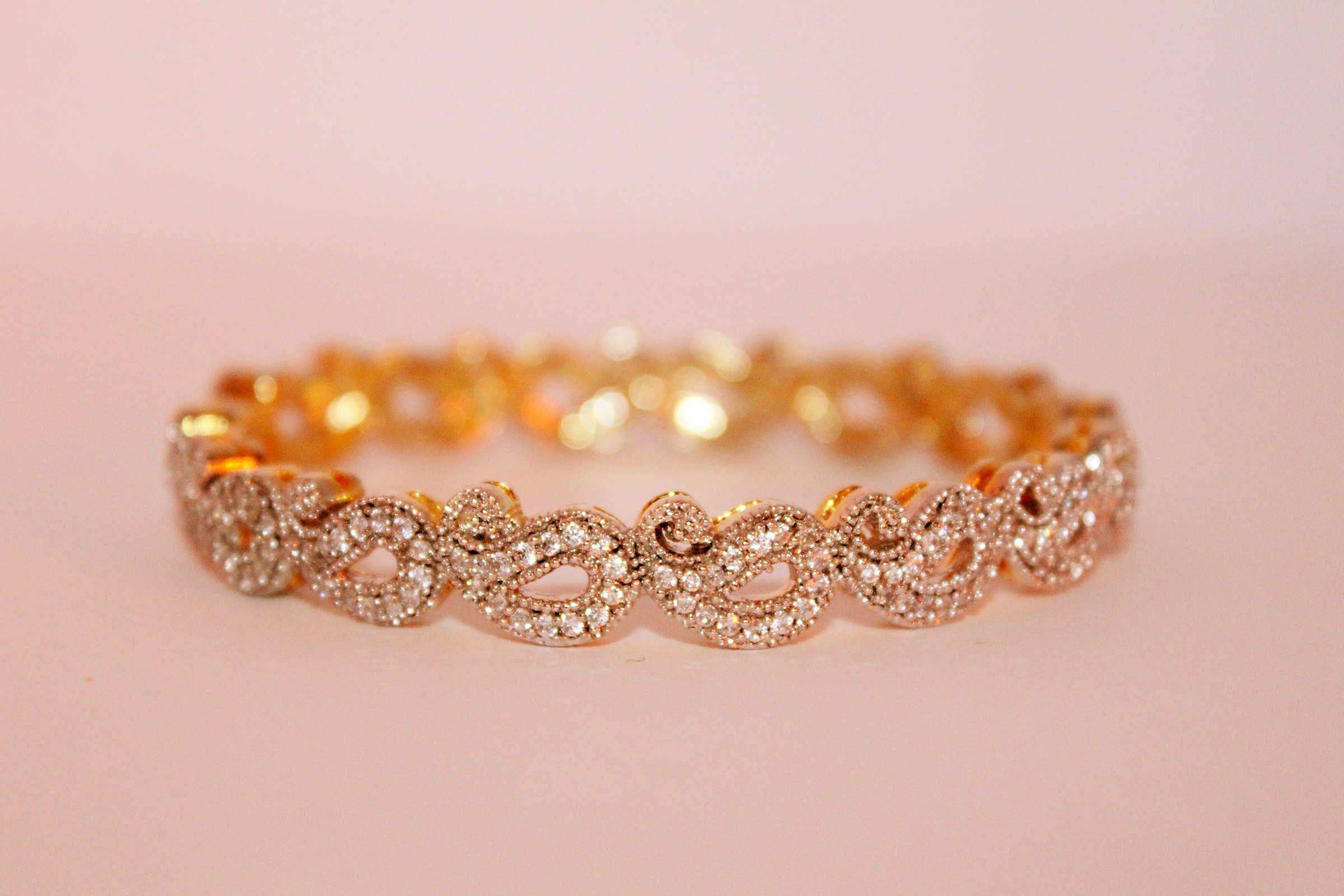
Heart-shape is essentially a pear cut with a notch at the rounded end to create the heart silhouette. Brilliant-cut faceting, lots of sparkle, very romantic, very polarizing.
Pricing 20-25% below round.
Symmetry is the single most important spec. Both lobes of the heart must be exactly equal; the cleft must be perfectly centered; the point must be true. Asymmetric heart cuts look cheap. Buy from a vendor with high-quality video and verify the symmetry yourself.
Best at 1.0ct and larger — smaller hearts lose the shape definition. V-prong setting at the point is standard.
At a glance
- Price vs round
- -22%
- Face-up coverage
- 0.95×
- Sparkle character
- Brilliant
- Resale liquidity
- Weak
- Length-to-width
- 0.90-1.10 (aim for 1.00)
- Clarity to buy
- VS2 / SI1
- Colour
- Check the point and both lobes
- Setting
- V-prong at the point; custom halo if halo
- Watch out for
- Symmetry first, sparkle second
What a heart cut is
A heart is a pear cut with a notch driven into the rounded end, which means it inherits pear optics: brilliant faceting, a single point, bowtie potential, and colour collecting at the tip. What it adds is the cleft, and with it a second requirement — symmetry across a vertical axis. Two lobes, one cleft, one point, all having to agree with each other.
That is why hearts are demanding. A pear can be slightly off and still read as elegant; a heart that is 5% asymmetric reads as a mistake. It is the only shape on this site where the silhouette matters more than the light performance, and where a technically well-cut stone can still fail on looks.
Proportions and symmetry: the real spec
Everything on the report is secondary to four visual checks.
Length-to-width ratio
Around 1.00 is the target, with 0.90-1.10 the accepted window. Below 0.90 the stone reads tall and narrow; above 1.10 it reads wide and squat. Because the measurement runs across the lobes and the point, the numbers alone will not tell you whether it is a good heart — the photograph will.
The cleft and the lobes
The cleft — the notch at the top — must be dead centre and clearly defined; a shallow or off-centre cleft makes the stone read as a blob with a dent in it. The lobes should match in size and fullness in curve. Anything that should look symmetrical must look symmetrical straight down, without tilting the photo.
The point
True, and aligned with the cleft. If the point sits left or right of the centre line the whole stone looks lopsided on the hand whatever the certificate says. It is also the thinnest part of the stone, and a V-prong belongs over it.
Clarity and colour for a heart
Brilliant faceting works here exactly as it does in a pear: VS2 and SI1 are the value grades through the body, and the place to look carefully is the point, where inclusions are more visible and the material is thinnest. Avoid anything plotted right at the tip unless you have seen the stone.
Colour collects at the point and in the shadow of the cleft, so run the daylight test before committing: face the stone up and compare the tip against the lobes. H or better in platinum and white gold, I-J in yellow gold. Size matters more here than on any other shape — below about a carat the cleft softens and the stone starts reading as a generic teardrop.
Settings, mistakes, and who it suits
Settings that suit it
A V-prong over the point first, then whatever fits the wearer: a plain solitaire keeps the silhouette clean, a halo cut to the heart outline magnifies it (make sure the halo is shaped to the stone rather than a generic oval), and three-stone designs with pear or round sides work when the centre is large enough to hold the shape.
Mistakes buyers make
Buying under a carat, where the shape dissolves. Accepting an asymmetrical stone because the sentiment is doing the deciding. Ordering from a listing with no video — this cut cannot be judged from a report. Using a single round prong on the point instead of a V. And assuming the resale will match the romance.
Who it suits
Someone buying symbolism rather than a look: an anniversary, a proposal, a piece with a specific meaning, and a preference for a bold silhouette over a subtle one. It is also the least safe shape to buy as a surprise — reaction to a heart is genuinely binary.
Price, resale, and what to expect
Heart sits at the deep end: 20-25% under round in the pricing guidance, -22% on the comparison table, and 0.75× in the calculator model, tied with marquise for the largest discount on this site. You pay less per carat because the market for the shape is smaller, not because the stone is worse.
Resale is rated Weak, and the reason is simple: a heart buyer wants a heart, and there are fewer of them at any given moment. If resale matters at all, take a GIA-graded stone above a carat, keep the report with it, and expect a private sale to take longer than the same money would in a round.
Frequently asked questions
What size should a heart diamond be?
One carat and up. Below that the cleft flattens out and the stone reads as a teardrop or a blob rather than a heart — which defeats the reason for buying the shape. If the budget will not reach 1ct, a pear gives you the same optics with more definition at smaller sizes.
How do I know if a heart is symmetrical?
Four checks, straight down: the cleft is centred, the lobes match in width and curve, the point lines up with the cleft, and the two halves mirror each other without tilting the photo. Certificates plot inclusions, not silhouette quality — the image is the evidence.
Do heart diamonds chip at the point?
They can, exactly like a pear — the tip is the thinnest material in the stone. A V-prong folded over the point is the standard protection and should be treated as mandatory rather than an upgrade.
Are heart diamonds a good value?
You buy at a 20-25% discount to round and the shape is unmistakable, so the value is real if you intend to wear it. Resale is rated Weak here, so treat it as a purchase for the wearer rather than a store of value, and keep the GIA report either way.